


Файли cookie допомагають нам забезпечити безпеку сайту та покращити ваш досвід користування. Дізнайтеся більше або змініть свої налаштування файлів cookie.
Ми використовуємо файли cookie, щоб забезпечити вам найрелевантніший досвід.
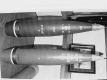
Shell, 155 mm, HE L15A1, L15A2 and L15A3


Регіон
United Kingdom

Italy
Категорія

Боєприпаси, ракети та високоточне озброєння
Опис
Armament These projectiles can be fired from the following 155 mm self-propelled howitzers: TAMSE VCA 155; PzH 2000 ; Rheinmetall M109A3G and M44T ; Soltam Slammer; Otobreda Palmaria and M109L ; K9 Thunder ( South Korea ); VSEL AS90 and Braveheart ; M284 Cannon for M109A5 and M109A6 Paladin self-propelled howitzers; XM2001/XM2002 Crusader AFAS. These projectiles can be fired from the following towed 155 mm howitzers: FH-70 and FH-70 R; GH N-45 ; CITEFA CALA 30/2; Patria Vammas 155 GH 52 Howitzer; Soltam M-46;
Otobreda 155 mm 155/39 TM; RDM 155 mm M139 and M114/39 ; SANTA BARBARA 155 mm SB 155/39 and 155/52 APU SBT-1 Howitzers, M114 155/45 and M114/39 ; Bofors FH-77B ; M199 Cannon for M198 Towed Howitzer; XM777 Lightweight Towed Howitzer. Development The 155 mm L15 HE projectile is one of the three projectiles developed as a result of the tripartite agreement entered into by Germany, Italy and the UK, to develop the 155 mm FH-70 Howitzer and its associated ammunition. The 155 mm HE L15 is mainly a Royal Ordnance (now BAE Systems , RO Defence) development as is the `three cartridge' charge system. The main difference between the 155 mm HE L15A1 and L15A2, is that the L15A2 has an obturator band behind the drive band, enhancing performance in worn barrels. The L15A3 has a revised drive band and obturator arrangement. There is also a L15A4 which has two nylon obturator bands to provide extra in-bore stability when fired from 52-calibre barrels. It has been proposed that as the explosive fillings of L15 series projectiles pass their safe life date, the explosive could be removed and replaced by a mixture of epoxy resin and slate dust with the same specific gravity as the original explosive. Once the fuze has been replaced by a suitable inert unit this would allow the projectiles to be fired as relatively cost-effective direct fire anti-armour munitions. Description The 155 mm HE L15A1/L15A2 is a separate loading projectile with a thin-walled, low-drag, high-fragmentation steel body. The projectile is streamlined, has a recessed base and a length-to-diameter ratio of 5.5:1. A carbon steel disc is secured at the bottom of the recessed base, while a single welded drive band is pressed into a pre-prepared groove encircling the body close to the base. The internal walls of the shell are painted with lead free primer to which a solution of TNT in xylene is added, providing the adhesive surface for the main filling. The filling is approximately 11.3 kg of RDX/TNT Type G. A circular paper tube-lined cavity is formed below the nose to receive an exploder and is normally sealed during storage by an inert composition. The exploder fits into the tube-lined cavity and consists of a sealed aluminium container filled with 150 g of pressed RDX/WX8 93/7 pellets. A lifting band around the exploder container enables it to be removed when necessary. The weight of a filled projectile can vary between 41.75 and 43.35 kg so the shell weights are differentiated into three zones which are marked on the shell body by painted squares. The main difference between the 155 mm HE L15A1 and L15A2, is that the L15A2 has an obturator band behind the drive band to enhance performance in worn barrels. The charge system used with the tripartite family of 155 mm ammunition is known colloquially as the `three cartridge' system. As its name implies the system is made up of three cartridges, the first two with a base charge and a number of increments. Cartridge 3 (Charge 8) is a unitary charge. (British designations are used here.) Cartridge 1, the Charge Propelling, 155 mm, Howitzer, Charge 2, L2A1 consists of the Charge 1 and Charge Propellant Increment 2 combined to form Charge 2. The two weigh 1.21 kg and use SC/202 propellant. They are stitched together and should not be separated. Charge 1 L1A1 consists of a salmon pink cloth bag, containing 783 g of propellant SC/Z008 with an Igniter L19A1 containing 67 g of NC/200 and 18 g of G20 gunpowder stitched to its base. The forward part of the bag is recessed to contain the Charge Propellant Increment 2, a white cloth bag containing 311 g of propellant SC/Z008. Cartridge 2, the Charge Propelling, 155 mm, Howitzer Charge 7, L8A1 is made up from Charge 3 L4A1 and Charge Propellant Increments 4 to 7. Total weight is 7.55 kg. The Charge Propelling 155 mm, Howitzer, Charge 3, L4A1 consists of a smoke grey cloth bag containing 1.39 kg of NO25 propellant divided into two equal bundles. The charge bag is stitched into a combustible sleeve which in turn is secured in a smoke grey main charge bag. The sleeve and main charge bag are large enough to receive the propellant increments 4 to 7 which, when assembled with Charge 3, form the Charge 7 L8A1. On the base of the main charge bag is fitted the Igniter L20A1, containing 80 g of propellant NC/200 and 18 g of G20 gunpowder. The mouth of the main charge bag is fitted with a Velcro loop and hook. The Charge Propellant Increment 4 consists of an orange cloth bag containing 529 g of NO25 propellant. The Charge Propellant Increment 5 consists of a grass green cloth bag containing 1.56 kg of N/S 134-040 propellant together with a flash inhibitor pack. This pack contains 125 g of potassium sulphate powder and is positioned in the centre of the propellant. Wrapped and secured around the front end of the propellant is 17 g of lead foil. The Charge Propellant Increment 6 consists of a dark violet cloth bag containing 2.42 kg of N/S 134-040 propellant divided into two equal bundles, each of which has a lead foil strip wrapped and secured around its front end. The Charge Propellant Increment 7 consists of a beige cloth bag containing 1.49 kg of N/S 134-040 propellant divided into three equal bundles, each of which has lead foil wrapped and secured around its front end. Cartridge 3 is the Charge, Propelling, 155 mm, Howitzer, Charge 8, L10A1 . This consists of a brown combustible main case and a pink combustible end cap. The end cap contains an Igniter, Propelling, Charge L23A1 mounted on a perforated disc. The propellant charge bundle consists of 12.48 kg of N/S 54.14 propellant sticks, tied in five places using polyester/cotton thread and incorporating lead foil positioned under the top layer of sticks. All charges are ignited by the Primer Percussion DM191A1 which contains a primary charge of 1.25 g of nitrocellulose S536. The Rheinmetall 155 mm FH-70 R has a 46 calibre barrel with an enlarged chamber which allows it to accommodate a larger Charge 9. When fired using this charge the 155 mm HE L15A1/L15A2 has a muzzle velocity of over 910 m/s and can reach a range of 30,000 m. When fired from the 155 mm FH-70 Towed Howitzer using the three cartridge system the 155 mm HE L15A1/L15A2 can attain the following range performances: Charge 2 - range 3,900 to 5,900 m Charge 3 - range 4,800 to 7,500 m Charge 4 - range 6,200 to 9,500 m Charge 5 - range 8,500 to 12,500 m Charge 6 - range 11,200 to 16,800 m Charge 7 - range 14,200 to 20,900 m Charge 8 - range 17,000 to 24,700 m. When fired from the 155 mm FH-70 Towed Howitzer the 155 mm L15A1/L15A2 has a maximum muzzle velocity of 827 m/s. It is anticipated that future 155 mm propellant charge systems will involve Modular Charge Systems (MCS). The German Army has already adopted the Rheinmetall DeTec Modular Propelling Charge System (MPCS) DM 72, as have Norway and Malaysia . The United Kingdom has adopted the South African SOMCHEM M90 Bi-Modular Charge System. The matching training projectile for the 155 mm HE L15A1/L15A2 is the Shell, 155 mm, Howitzer, Inert, L17A2, although the NATO 155 mm HE M107 is often used for (relatively) low-cost firing training. The L17A1 uses an inert high-explosive substitute filling and the nose fuze well is closed by a Plug Representing Fuze (PRF) type L32. Weight is a nominal 43.55 kg. In mid-1997 the British Army had a requirement for 5,000 of these projectiles for delivery by February 1998. The Rheinmetall 155 mm DM 108 is an inert Drill projectile. Royal Ordnance, Ammunition Division, (now BAE Systems , RO Defence) developed the 155 mm RO 24-03A1 (equivalent to the L17A2) and RO 24-05A1 training projectiles as the ballistic equivalents of the 155 mm HE L15A1/L15A2. In UK service the RO 24-05A1 is known as the L19. For details see separate entry for the 155 mm RO 24-05A1. Authorised fuzes PD L106A2, L85A2, L112A1 MT L92A2 Equivalent projectiles ITALY ITALY Manufacturer Simmel Difesa SpA Type: 155 mm HE L15A2B1 Description: Standard specifications as text with explosive filling given as Compound B. The main change from the L15A2 is a revised drive band profile which permits firing from worn barrels. 155 mm TP L15A2B1 also produced with explosive filling replaced by an inert mixture surrounding 2 kg of black powder to provide flash, sound and smoke on impact. 155 mm TP L17A2B1, containing inert filling only, also produced Manufacturer Simmel Difesa SpA Type: 155 mm HE P3 Description: Similar to 155 mm HE L15A2 but constructed in two pieces, the shell body and the base/tail unit, which are connected by six pins UNITED KINGDOM Manufacturer BAE Systems , RO Defence Type: 155 mm HOW HE RO24 Description: Essentially similar to L15 projectiles but optimised for ordnance meeting the NATO Joint Ballistics Memorandum of Understanding. The high tensile steel walls are thinner than those of the L15 series and contain 11.7 kg of RDX/TNT. Total weight is 43.4 kg. The Shell 155 mm HOW Inert RO24-03 is a training version.