


Файли cookie допомагають нам забезпечити безпеку сайту та покращити ваш досвід користування. Дізнайтеся більше або змініть свої налаштування файлів cookie.
Ми використовуємо файли cookie, щоб забезпечити вам найрелевантніший досвід.
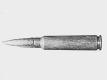
7.5 × 55 mm
Регіон

Sweden

Germany

Switzerland
Категорія

Ammunition, Missiles and precision weapons
Опис
The cartridge case is rimless and bottlenecked and is currently made of brass, although steel has been used in the past; aluminium alloy cases have been produced in trial quantities and may be encountered. The bullet is of conventional compound form, with a lead alloy core, steel jacket and copper envelope. The standard Ball GP11 is of streamlined form. Commercial loadings in this calibre are to sporting specification, with soft-nosed bullets, since numbers of earlier Schmidt-Rubin bolt-action rifles were disposed
of as surplus. In its original form the 7.5 mm round was adopted by the Swiss in 1889, one of the first small calibre military rifle cartridges to see service. It was originally used in the Schmidt-Rubin straight pull bolt action rifle, adopted in the same year as the cartridge. The original bullet was round nosed and paper patched, but by 1911, after several improvements, the ogival bullet design was standardised and remained the standard thereafter. The name 'Schmidt-Rubin' commemorates the rifle design of Colonel Schmidt and the cartridge design of Major Rubin, who was instrumental in perfecting the small calibre jacketed bullet concept, along with the rifle in which it was originally used. The 7.5 mm Swiss cartridge is unique to the Swiss Army and has been used in various Schmidt-Rubin bolt-action rifles, the Stgw 57 and SG510 automatic rifles and Swiss machine guns. Although the Swiss adopted a 5.56 mm rifle in 1990, the 7.5 mm weapons are still widely distributed and are likely to remain in service for many years.