


Cookies help us keep our website safe and give you a better experience. Read more or change your cookie settings.
We use cookies to give you the most relevant experience.
107 mm HE bomb M329, M329A1, M329B1
Region

United States
Category

Ammunition, Missiles and precision weapons
Description
Armament US 107 mm Mortars M2 and M30 . Development This mortar and its associated ammunition was developed in the 1920s for the US Chemical Warfare Service production. However, it was limited and it was not until 1943 that it was approved for general service using explosive bombs. The basic bomb design has remained the same throughout the mortar's life, minor improvements being made from time to time. The 107 mm mortar and its ammunition became obsolescent in US service during the mid-1990s, being replaced by the
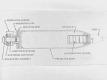
M120/M121 120 mm mortar. The 107mm mortar is, however, widely used and may be encountered throughout the world. Description The bomb body is parallel-sided, with an ogival head and more generally resembles an artillery projectile than a conventional mortar bomb. A doughnut shaped cloth bag containing the first five propelling increments is never removed. The remainder of the charge consists of M8 sheet propellant increments, which are removed to adjust range. The nose adaptor is threaded for the fuze, which may be impact, delay or proximity. At the rear of the bomb is the cartridge container and obturation system, which is unique to this weapon. The 107 mm mortar is rifled, which presents the problem of how to drop load it and still engage with the rifling when fired. At the base of the bomb is a tubular cartridge container, which has the usual type of primary cartridge inserted into it and secondary increments fitted around it. The cartridge container is screwed into the base of the bomb; around the upper end of the container is a copper `rotating disc' which is dished so that the concave face is towards the cartridge container. This ensures the diameter of this dished plate is less than the bore of the mortar, enabling the bomb to be drop loaded in the usual way. Below this rotating disc lies a steel `pressure plate', of the same diameter as the bomb body. On firing, the propellant charge explodes and the gas pressure forces the pressure plate forward. This forces the dished rotating disc to flatten out so that its edges bite into the rifling of the barrel and form a gas seal. The attachment of the rotating disc to the bomb is such that any rotation of the disc, induced by the rifling, will be transmitted to the bomb. Therefore, as the gas pressure drives the bomb up the bore, the interaction of the disc in the rifling grooves develops spin in the bomb. The M329A2 has a pre-engraved rotating band which engages the rifling of the mortar bore as the bomb is dropped in the tube. There is also an obturator on the projectile base, which functions similarly to the pressure disc of the M329A1 to seal the rotating band in the mortar tube upon firing. The M329B1 has a forged body with an integral base. Manufacturer US government contractors.