


Cookies help us keep our website safe and give you a better experience. Read more or change your cookie settings.
We use cookies to give you the most relevant experience.
Rheinmetall DM 642 155 mm cargo shell

Region

Italy
Category

Боєприпаси, ракети та високоточне озброєння
Description
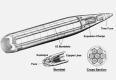
Armament This projectile can be fired from the following 155 mm self-propelled howitzers: TAMSE VCA 155; PzH 2000 ; Rheinmetall M109A3G and M44T ; Soltam Slammer; Otobreda Palmaria and M109L ; K9 Thunder ( South Korea ); AS90 and Braveheart ; M284 Cannon for M109A5 and M109A6 Paladin self-propelled howitzers; XM2001/XM2002 Crusader AFAS. This projectile can be fired from the following towed 155 mm howitzers: FH-70 and FH-70 R; GH N-45 ; CITEFA CALA 30/2; Patria Vammas 155 GH 52 Howitzer; Soltam M-46; Otobreda 155
mm 155/39 TM; RDM 155 mm M139 and M114/39 ; SANTA BARBARA 155 mm SB 155/39 and 155/52 APU SBT-1 Howitzers, M114 155/45 and M114/39 ; Bofors FH-77B ; M199 Cannon for M198 Towed Howitzer; XM777 Lightweight Towed Howitzer. Development The DM 642 (RB 63) 155 mm cargo shell was originally a Rheinmetall development, with some funding from the German Ministry of Defence, to produce a cargo projectile with a longer range than the 155 mm DPICM M483A1. The first test rounds were fired during 1983. The 155 mm DM 642 became a joint development with Simmel Difesa SpA (formerly BPD Difesa e Spazio) of Italy, which also marketed the DM 642. 155 mm RB 63 projectiles produced by Simmel have been known as the 155 mm IM 303 BCR, or simply BCR (Bomblets Cargo Round). Earlier versions of the DM 642 varied by having several forms of expulsion units or bomblets without a self-destruct capability. The first type was the DM 602, followed by the essentially similar DM 612 and then the DM 632 which introduced DM 1383 self-destruct bomblets. An essentially similar enhanced range projectile, the Rheinmetall 155 mm Rh 49, was developed in tandem with the RB 63 (DM 642) and involves a low-drag body combined with a Base Bleed (BB) unit ballistically matched to the US 155 mm DPICM M864 producing a maximum range of around 30,000 m; the number of DM 1383 bomblets carried is reduced to 49. Weight, unfuzed, is 46.13 kg; maximum range is 28,500 m. This extended range version is known as the DM 652. In June 1996, it was announced that Israel Military Industries Limited ( IMI ) and Rheinmetall Industrie AG (now Rheinmetall DeTec) of Ratingen, Germany, had entered into agreement concerning future co-operation in the field of artillery bomblet ammunition, including the IMI M85 dual-purpose bomblet which has a self-destruct mechanism. Both companies will combine their expertise in the development of future bomblet artillery projectiles in 155 mm calibre. Rheinmetall will also procure 155 mm projectile payloads from IMI and integrate them into its own artillery projectiles. One result of the latter agreement was the late 1996 award to Rheinmetall Industrie GmbH (now Rheinmetall DeTec) of a contract from Norway to supply an unspecified number of Base Bleed (BB) cargo rounds carrying IMI M85 dual-purpose bomblets with self-destruct mechanisms. The projectile involved is the DM 662, a development of the DM 652 configured to accommodate 49 IMI M85 bomblets. Description The 155 mm DM 642 is a separate loading base ejection carrier projectile, using a high-grade steel carrier shell (known as the DM 1396) with the cavity filled by a total of 63 DM 1383 (RH II) dual-purpose (anti-personnel/anti-armour) bomblets. An expulsion charge is located under the nose fuze well and within the streamlined ogive, while the recessed aluminium base is secured in position by shear pins. A wide copper drive band encircles the body close to the boat tailed base section. The projectile is supplied with a lifting plug. After firing the nose-mounted MTSQ DM 163 or M577 fuze will function at the selected time, ideally about 300 to 500 m above the target area. The fuze functioning ignites, via a small booster charge, the expulsion charge which creates an expansion of gases within the ogive. This pressure is transmitted downwards to the aluminium baseplate until the shear pins rupture and the baseplate falls away. The contents of the bomblet are then expelled through the base and scattered over the target area by centrifugal forces created by the spin of the carrier shell. The 155 mm DM 642 carries 63 DM 1383 bomblets arranged in a central stack of nine bomblets surrounded by a further six nine-bomblet stacks. Each DM 1383 bomblet has a steel body containing a small shaped charge and a sensitive impact fuze. The bomblets are intended to detonate on impact but if for any reason this fails to happen a self-destruct fuze will function after about 15 seconds. If both fuzes fail the bomblet fuze has a back-up safety. As they detonate, the DM 1383 bomblets create an optimum number of anti-personnel fragments and an anti-armour effect. To improve the effectiveness of the shaped charge jet the bomblets are provided with an aerodynamic brake which greatly reduces spin before impact. A nylon ribbon attached to the arming screw on the fuze is used to arm the fuze after expulsion from the projectile and also stabilises the bomblet during flight. The DM 1383 bomblet is heavier and larger than the M42/M46 bomblet used with the 155 mm DPICM M483A1 and distributes a greater number of effective fragments with increased energy. The DM 1383 bomblet weighs 290 g and has a diameter of 42 mm; length is 95 mm. The charge system used with the tripartite family of 155 mm ammunition and the RB 63 (DM 642) is known colloquially as the `three cartridge' system. As its name implies the system is made up of three cartridges, the first two with a base charge and a number of increments. Cartridge 3 (Charge 8) is a unitary charge. (UK designations are provided here.) Cartridge 1, the Charge Propelling, 155 mm, Howitzer, Charge 2, L2A1 consists of the Charge 1 and Charge Propellant Increment 2 combined to form Charge 2. The two weigh 1.21 kg and use SC/202 propellant. They are stitched together and should not be separated. Charge 1 L1A1 consists of a salmon pink cloth bag, containing 783 g of propellant SC/Z008 with an Igniter L19A1 containing 67 g of NC/200 and 18 g of G20 gunpowder stitched to its base. The forward part of the bag is recessed to contain the Charge Propellant Increment 2, a white cloth bag containing 311 g of propellant SC/Z008. Cartridge 2, the Charge Propelling, 155 mm, Howitzer Charge 7, L8A1 is made up from Charge 3 L4A1 and Charge Propellant Increments 4 to 7. Total weight is 7.55 kg. The Charge Propelling 155 mm, Howitzer, Charge 3, L4A1 consists of a smoke grey cloth bag containing 1.39 kg of NO25 propellant divided into two equal bundles. The charge bag is stitched into a combustible sleeve which in turn is secured in a smoke grey main charge bag. The sleeve and main charge bag are large enough to receive the propellant increments 4 to 7 which, when assembled with Charge 3, form the Charge 7 L8A1. On the base of the main charge bag is fitted the Igniter L20A1 containing 80 g of propellant NC/200 and 18 g of G20 gunpowder. The mouth of the main charge bag is fitted with a Velcro loop and hook. The Charge Propellant Increment 4 consists of an orange cloth bag containing 529 g of NO25 propellant. The Charge Propellant Increment 5 consists of a grass green cloth bag containing 1.56 kg of N/S 134-040 propellant together with a flash inhibitor pack. This pack contains 125 g of potassium sulphate powder and is positioned in the centre of the propellant. Wrapped and secured around the front end of the propellant is 17 g of lead foil. The Charge Propellant Increment 6 consists of a dark violet cloth bag containing 2.42 kg of N/S 134-040 propellant divided into two equal bundles, each of which has lead foil strip wrapped and secured around its front end. The Charge Propellant Increment 7 consists of a beige cloth bag containing 1.49 kg of N/S 134-040 propellant divided into three equal bundles, each of which has lead foil wrapped and secured around its front end. Cartridge 3 is the Charge, Propelling, 155 mm, Howitzer, Charge 8, L10A1 . This consists of a brown combustible main case and a pink combustible end cap. The end cap contains an Igniter, Propelling, Charge L23A1 mounted on a perforated disc. The propellant charge bundle consists of 12.48 kg of NS 54.14 propellant sticks tied in five places using polyester/cotton thread and incorporating lead foil positioned under the top layer of sticks. All charges are ignited by the Primer Percussion DM 191A1 which contains a primary charge of 1.25 g of nitrocellulose S536. Using Charge 8 the muzzle velocity of the 155 mm DM 642 is 802 m/s and maximum range 22,400 m. The maximum range of the extended range 155 mm DM 652 is 28,500 m. It is anticipated that future 155 mm propellant charge systems will involve Modular Charge Systems (MCS). The German Army has already adopted the Rheinmetall DeTec Modular Propelling Charge System (MPCS) DM 72, as have Norway and Malaysia . For training purposes Rheinmetall DeTec have proposed a 155 mm Bomblet Practice Round based on the DM 1396 carrier shell for the 155 mm DM 642 DPICM but containing 24 practice bomblets which produce only smoke, flash and noise on impact, destroying the practice bomblets in the process; non-functioning practice bomblets are identifiable and can be picked up safely. The Bomblet Practice Round has the same ballistic performance as the DM 642 with a maximum range of 22,400 m when using the L10A1 or M203 propelling charge. Authorised fuzes MTSQ M577 or DM 163 Equivalent projectiles ITALY ITALY Manufacturer Simmel Difesa SpA Type: 155 mm BCR Description: Contains 63 dual-purpose bomblets with self-destruct devices. Projectile weight with lifting plug is 49 kg