


Cookies help us keep our website safe and give you a better experience. Read more or change your cookie settings.
We use cookies to give you the most relevant experience.
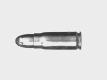
7.63 × 25 mm
Region

Italy

Portugal
Category

Ammunition, Missiles and precision weapons
Description
The case is rimless, bottlenecked and Berdan or Boxer primed. Manufacture took place in many countries in the past and steel-, brass-, or nickel-plated brass cases can be found. Many different types of bullet have been used in this weapon, but the military standard has always been a full metal jacketed type of 5.57 g weight. The high velocity and flat trajectory of this round, coupled with its FMJ bullet make it an excellent performer against body armour and light metal barriers. The 7.63 mm Mauser pistol
cartridge was developed by the Mauser company in about 1896, and is virtually identical to the earlier Borchardt cartridge. The dimensions are very similar but the Mauser loading is more powerful. Although the Mauser pistol ceased manufacture in the early 1930s, there are several weapons still in existence which chamber this round and it is still commercially manufactured. The 7.62 × 25 mm Tokarev cartridge is essentially identical to the 7.63 × 25 mm; the existence and continued production of pistols and sub-machine guns in 7.62 × 25 mm are the primary reasons for the continued production of this cartridge. Weapons chambered for this cartridge have recently regained a degree of popularity in some East European special operations and law enforcement organisations because of the bullet's ability to penetrate most body armour, increasingly being worn by criminals. The cartridge is also regaining some popularity in the USA because of a recent influx of thousands of surplus VZ-52 pistols from the Czech republic. Applications include mauser c/96 pistol and variants; Spanish and Chinese copies of the Mauser c/96; early Bergmann, Steyr-Solothurn and Neuhausen sub-machine guns. Also Soviet, Chinese and other weapons chambered for the 7.62 mm Tokarev cartridge, which is virtually identical in almost every detail and is generally usable in any pistol or submachine gun chambered in either calibre.