


Cookies help us keep our website safe and give you a better experience. Read more or change your cookie settings.
We use cookies to give you the most relevant experience.
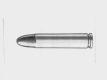
0.30 Carbine
Region

South Africa

Brazil

Mexico
United States

Israel

Sweden
Category

Ammunition, Missiles and precision weapons
Description
The case is rimless, straight tapered, and usually of brass, though steel cased ammunition was made in the USA in 1942-45. This cartridge was developed in 1940 by the Winchester Repeating Arms Company, to a specification issued by the US Ordnance Department. It was broadly based upon the 0.32 Winchester Self-Loading rifle round of 1906 and was standardised as the 'Cartridge, Carbine, Cal .30 M1' on 30 September 1941. The bullet is blunt-nosed, having a lead core and gilding metal jacket, and flat based. Production
was entirely by government plants until 1945. After the war large numbers of M-1 carbines were disposed of commercially, therefore commercial cartridge manufacture began and has continued ever since. Some 6.2 million carbines were made by US government contractors and several companies have produced commercial copies since the mid-1950s. As a result the weapon is widely distributed and is commonly in use by military and police forces throughout the world. The ballistics of the 0.30 carbine cartridge, however, make it a relatively poor choice for military or law enforcement organisations. Originally for the US Carbine M1. The cartridge will operate in M1, M1A1 , M2 and M3 carbines and in commercial copies such as those made by High Standard and other companies. The 0.30 carbine cartridge was also used in the Cristobal carbine. A handful of sub-machine guns, automatic pistols and revolvers have been chambered for this cartridge but none have been very successful, the ballistics not being optimum for short-barrelled weapons.