


Cookies help us keep our website safe and give you a better experience. Read more or change your cookie settings.
We use cookies to give you the most relevant experience.
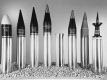
Ammunition for Cockerill and ENGESA 90 mm guns

Region

Brazil

United Kingdom

Belgium

France
Category

Ammunition, Missiles and precision weapons
Description
The Ammunition for Cockerill and ENGESA 90 mm guns is all rounds for the 90 mm Mk II and III Cockerill Guns are fixed with the finned steel projectiles, crimped into their cartridge cases by a 360º crimping ring. The drive bands are gilding metal or copper. Cartridge cases produced by MECAR SA are brass. In all cases, other than the MECAR 90 mm APFSDS-T M652, a cool burning single-base propellant is used along with a percussion primer. The projectiles all have fin assemblies for in-flight stabilisation with each
fin assembly having four fixed T-shaped fins. The 90 mm rounds are provided with special graze action fuzes with two independent safeties which comply with MIL-STD-1316. These fuzes function at very small impact angles, for example as small as 2º incidence, and a tail-mounted tracer element that burns for 4 seconds after firing. In all cases the fuze muzzle safety distance is a minimum of 25 m. A full listing of 90 mm rounds for the Mk II and III Cockerill Guns follows. Intended for general purpose blast and fragmentation, this round has a steel projectile filled with 1.02 kg of Composition B. The round is fitted with a nose-mounted double safety fuze which complies with MIL-STD-1316. The RO 933 round weighs 6.4 kg and is 352 mm long. ENGEQUÍMICA of Brazil produces its own design of 90 mm Canister round which is stated to have a muzzle velocity of 600 m/s and a maximum operational range of 700 m. The designation is 90G shrapnel. The PRB or Giat Industries designation for this type of round is Canister NR125. This round is intended for use against armoured targets, although it is also effective against concrete bunkers and structures. It has a round-nosed thin-walled steel projectile containing 1.3 kg of Composition A-3 (RDX/Wax 91/9). On contact with a target the thin steel projectile walls collapse to spread the explosive filling in a 'plaster' across the target surface before the delayed action BD/Graze fuze functions to detonate the filling. The resultant detonation forces and blast are then directed over the target surface and transmitted through the target material. When used against RHA, the resultant forces are sufficient to create severe internal spalling effects, usually in the form of a fragment weighing approximately 5 kg which travels at a high velocity inside the target.