


Cookies help us keep our website safe and give you a better experience. Read more or change your cookie settings.
We use cookies to give you the most relevant experience.
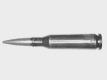
5.45 × 39 mm


Region
Armenia

Bulgaria

Poland

Romania

Germany
Category

Ammunition, Missiles and precision weapons
Description
The round is of conventional rimless bottlenecked form, somewhat fatter and shorter than the 5.56 × 45 mm round. The case is of lacquered steel and a stripe of red laquer seals the case/bullet joint. The Berdan primer is of brass and there are two fireholes in the primer pocket. The streamlined bullet consists of a mild steel core filling about two-thirds of the gilding metal envelope, and a lead plug about 3 mm long in front of it. The extreme 3 mm of the tip is hollow, which enhances the terminal effects of the
bullet against a human target. Soviet ballisticians are known to have been experimenting with reduced calibres prior to 1939, but work was abandoned during the Second World War. The 5.45 × 39 mm cartridge was probably developed as a result of the successful American experience with the 5.56 × 45mm cartridge in Vietnam to reduce recoil and increase full automatic fire control in AK-type rifles, resulting in the adoption of this round in 1974. The existence of this calibre in Soviet use was not known in the West until 1978 and specimens of ammunition were not obtained until late 1979. Applications include AK-74 series rifles and sub-carbines, AK-107 , AN-94 assault rifle, RPK-74 light machine gun and others.