


Cookies help us keep our website safe and give you a better experience. Read more or change your cookie settings.
We use cookies to give you the most relevant experience.
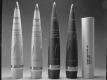
155 mm extended range full-bore HE projectiles

Region

South Africa

Argentina

China

South Korea

Singapore

Iraq

Slovakia

Spain

Austria

France

Netherlands

Switzerland
Category

Ammunition, Missiles and precision weapons
Description
Armament Towed 155 mm Howitzers: NORICUM GH N-45 ; CITEFA CALA 30/2; SRC International GC 45; NORINCO Type WA 021 and Type GM-45 ; Patria Vammas 155 GH 52 Howitzer; Giat Industries TR and 155/52 guns and M114F Howitzer; FH-70 ; Soltam Model 839P, 845P, Upgraded M-46 and M114S ; Otobreda 155/39; KH179 ; RDM M139 and M114/39 ; STK FH-88 and FH-2000; LIW G5; SITECSA 155/45 ST 012, M114 155/45 and M114 155/39; SANTA BARBARA SB 155/39 and 155/52 APU SBT-1 Howitzers; Bofors FH-77B ; Extended Range Gun ( Taiwan ); XM777
Lightweight Towed Howitzer; M46/84 (Federal Republic of Yugoslavia ). Self-propelled 155 mm howitzers: TAMSE VCA 155; NORINCO PLZ45 Self-propelled Gun-Howitzer; Giat Industries GCT and CAESAR 155/52; PzH 2000 ; Rheinmetall M109A3G and M44T ; Majnoon ( Iraq ); Soltam Rascal and Slammer; Otobreda Palmaria and M109L ; K9 Thunder ( South Korea ); ZTS ZUZANA ( Slovakia ); LIW G6; XT-69 ( Taiwan ); AS90 and Braveheart ; M109A4, M109A5 and M109A6 Paladin; XM2001/XM2002 Crusader AFAS. Development The 155 mm Extended Range Full-Bore (ERFB) projectile is a logical development of ballistic design exercises, extending back to the German `Paris Gun' of the First World War and even beyond. The basic outline of the modern ERFB was discernible in the 21 cm projectiles fired from the German 21 cm K (E) railway gun of the Second World War but it took the genius of the late Doctor Gerald Bull and his Space Research Corporation (SRC) team to fully exploit the potential of the design concept and bring it to the ERFB's present operational state, thereby increasing the range potential of modern 155 mm artillery pieces by a factor of at least one third, and often more, in one technological bound. During the early 1970s, and following the demise of the High Altitude Research Project (HARP), the Space Research Corporation of Canada undertook a series of design studies for the US Navy to increase the range of its shore bombardment weapons. No operational projectiles resulted from those studies but the experience led directly, over a four-year period, to the current form of the 155 mm ERFB design (the Mk 10 Mod.2), and the design of the 155 mm GC 45 gun-howitzer to fire the projectiles. The success of this 45 calibre gun-howitzer and ammunition combination led to numerous international collaborations, such as those between the Space Research Corporation and the Austrian NORICUM, the Belgian PRB SA and the South African Armscor , among others. Since the late 1970s/early 1980s, the spread of the ERFB concept and weapons to fire such munitions, has been one of the most significant technological and marketing aspects of the current artillery scene. During 1996, India placed a contract with Denel of South Africa for a total of 50,000 rounds of 155 mm ERFB ammunition. The contract was worth approximately R840 million (US$24.1 million) and included 40,000 HE rounds offered at US$390 each. More similar projectiles are being sought to replace those expended during the 1999 fighting in northern Kashmir. The application of the Base Bleed, or Base Burn (BB), unit to the 155 mm ERFB brought an additional significant range increase capability to the artillery field. Since the BB unit concept is relatively simple to apply to the ERFB, the 155 mm ERFB-BB projectile will also be considered in this entry. In 1996, it was announced that SOMCHEM , a Denel subsidiary, had developed a 155 mm Velocity-Enhanced Long Range (VLAP) projectile. See following entry for details. Description The 155 mm ERFB projectile follows a basic pattern but there are minor differences between projectiles produced by various manufacturers. The main design features of the 155 mm ERFB projectile are common to all, as they all have an extremely long streamlined outline which is virtually a continuous ogive from the nose to the copper or gilding metal drive band and plastic obturator band located close to the base; the drive and obturator bands are protected by a grommet until just before loading. The body outline is marked by the use of four steel bore riding nubs which are either machined at the same time as the rest of the projectile body or, more commonly, welded to the outline using mild steel. These angled nubs are intended to match the average projectile rotation and provide support for launch stability. A boat tailed drag reduction steel Hollow Base (HB) unit with a pronounced open hollow cavity is threaded onto the base of the shell body. The one-piece body is forged from high-grade steel, typically AISI 9260 or a similar grade. The explosive payload can vary but a typical explosive filling is 8.2 kg of Composition B or 8.6 kg of TNT. The detonation of a 155 mm HE ERFB projectile filled with Composition B and manufactured using AISI 9260 steel will result in an average of 4,750 fragments. The South African 155 mm ERFB produces approximately 7,000 fragments with an individual mass larger than 0.5 g using a nominal payload of 8.71 kg of RDX/TNT 50:50. The nose fuze cavity, which is normally occupied by a lifting plug during transport and handling, can accommodate a range of standard fuzes, including proximity and electronic fuzes. In place of the standard aluminium hollow base unit a BB unit can be installed without greatly affecting the overall dimensions or payload-carrying capabilities of the basic ERFB projectile. The steel-cased BB unit is threaded onto the base in place of the normal hollow base unit. The 155 mm ERFB then becomes 155 mm ERFB-BB and significant range increases can be achieved. The range increases are produced by a slow-burning block of inhibited propellant powder which is ignited on firing by the propelling charge gases. To ensure that the ignition remains constant as the projectile leaves the barrel the propellant gases also ignite a zirconium pellet which continues to burn for 2 seconds and ensures grain combustion. Most base bleed units continue to burn for about the first 30 seconds of a trajectory. The burning propellant does not provide thrust. Instead the gases produced by the BB unit emerge at subsonic velocity through a central port in the unit and inhibit the formation of drag-inducing turbulence which would otherwise collect to create drag behind the projectile base. By burning the BB propellant the base drag can be reduced by at least 50 per cent and sometimes as much as 70 per cent. This creates a significant increase in range potential, as much as 25 per cent in most cases, without the reduction in accuracy inherent in other range-enhancing systems such as rocket propulsion. A typical maximum dispersion figure for a 155 mm ERFB-BB is less than 0.5 per cent of the range; the figure for a 155 mm ERFB is 0.35 per cent. As an example the South African Motor BB 155 mm M1 weighs 4.8 kg, is 120 mm long and has an external diameter of 152 mm. South African 155 mm ERFB projectiles may be converted in the field by removing boat tails from ERFB projectiles and fitting base bleed units to produce 155 mm ERFB-BB projectiles. The process is carried out using a projectile clamping table. The same table can also be used to remove damaged obturators and fit new ones. The table can be folded flat and weighs 25 kg. To take full advantage of the range potential of 155 mm HE ERFB and ERFB-BB projectiles they are usually fired with high-energy charges, typically the NATO/American M3A1 (zones 3, 4 and 5), M4A2 (zones 3, 4, 5, 6 and 7), M119A1 (zone 8), M203 (zone 9) or the M11 (zone 10), the latter being restricted to 45 calibre or longer barrels. Typical range comparison figures for 155 mm HE ERFB projectiles fired from 39 and 45 calibre barrels are as follows: Barrel length 39 calibres 45 calibres Propelling charge M119A1 19,200 m 21,100 m M203 25,900 m 26,500 m M11 n/a 30,000 m Typical range comparison figures for 155 mm HE ERFB-BB projectiles fired from 39 and 45 calibre barrels are as follows: Barrel length 39 calibres 45 calibres Propelling charge M119A1 24,500 m 26,200 m M203 32,500 m 32,600 m M11 n/a 39,600 m Typical muzzle velocities for 155 mm HE ERFB and ERFB-BB projectiles when fired from 45 calibre barrels are as follows: Charge Muzzle velocity M3A1 zone 3 266 m/s M3A1 zone 4 302.1 m/s M3A1 zone 5 359.9 m/s M4A2 zone 6 458.1 m/s M4A2 zone 7 541.9 m/s M119 zone 8 658 m/s M203 zone 9 795.5 m/s M11 zone 10 897 m/s The propelling system for the LIW 155 mm G5 and G6 gun-howitzers originally involved a three-charge cloth bag system. This has been replaced by a modular system involving combustible cases, developed by SOMCHEM , with a built-in charge retaining device. The system may be used with ERFB, (above the basic Charge 2) ERFB-BB projectiles and all NATO 155 mm projectiles. The lowest charge for the SOMCHEM modular charge system is the Charge Propelling 155 mm Modular Charge 1 M51 . The combustible container for this charge is red and contains single-base granular propellant. The igniter consists of a combination of 20 g G12 gunpowder and 40 g CBI. The charge weighs approximately 2.3 kg, is 211 mm long and the diameter is 164 mm. The next charge is the Charge Propelling 155 mm Modular Charge 2 M52 . The combustible case is blue and houses triple-base propellant cords. The diameter at the front of the case is reduced to allow it to friction fit into the rear of a Charge 2 increment (see below). The igniter consists of a combination of 20 g G12 gunpowder and 40 g CBI. The charge weighs approximately 5.6 kg, is 373 mm long and the diameter is 164 mm. This modular system continues with the Charge Propelling 155 mm Modular Increment M52 . One or two of these increments can be added to the normal Charge 2. Charge 2 plus one increment can be used with boat tailed ERFB and all NATO 155 mm projectiles. Charge 2 plus two increments can be used with ERFB, ERFB-BB and all NATO 155 mm projectiles. Each increment is contained in a green combustible case containing triple-base propellant cords. The igniter consists of 60 g of G12 gunpowder. The charge weighs approximately 4 kg, is 289 mm long and has a diameter of 164 mm. The top charge of the modular system is the Charge Propelling 155 mm Modular Charge 3 M53 . The charge is contained in a purple (jacaranda) combustible case containing triple-base tubular propellant. The igniter consists of G12 gunpowder. The charge weighs approximately 17.1 kg, is 930 mm long and the diameter is 164 mm. All charges are ignited by the Tube Percussion M82 which contains 1.4 to 1.5 g of gunpowder. The tube is 49.37 mm long with a diameter over the rim of 15.24 mm. With this system the following ballistic performances can be achieved using a 45 calibre barrel: Charge 1 - MV 350 ±5 m/s - max range 9,100 m Charge 2 - MV 483 ±5 m/s - max range 13,400 m Charge 2 + 1 increment - MV 645 ±5 m/s - max range 19,000 m Charge 2 + 2 increments - MV 795 ±5 m/s - max range 25,400 m Charge 2 + 2 increments + BB - MV 789 ±5 m/s - max range 31,000 m Charge 3, standard shell - MV 897 ±5 m/s - max range 30,200 m Charge 3 + BB - MV 895 ±5 m/s - max range 39,000 m. This modular charge system was replaced by one involving up to six M62A1 combustible modular charges all with the same content and meeting the NATO Joint Ballistics MoU. The charges are produced by SOMCHEM and can be used with ordnance up to 52 calibres long. Other similar modular charge systems could be employed with ERFB and ERFB-BB projectiles. One-piece Combustible Cartridge Cases (CCC) have been developed for use with 155 mm ERFB projectiles. A typical example is the C30 charge manufactured by Chartered Ammunition Industries of Singapore . The separate loading C30 contains 14 kg of triple-base propellant, is 770 mm long and has a diameter of 160 mm. It will provide a range of 30,000 m using a 39 calibre barrel and 40,000 m using a 45 calibre barrel. One further charge developed for use with 39 and 45 calibre 155 mm barrels firing ERFB projectiles, is the Propelling Charge No 16 produced by Eurometaal NV of the Netherlands. This is a separate loading single-bag charge of single-base nitrocellulose CH21 propellant with a 50 g clean-burning igniter in a red cloth bag sewn onto the base. The charge incorporates a central igniter core and a flash reducer containing 250 g of potassium sulphate. A wear-reducing and decoppering liner are sewn to the inner surface of the bag. The complete charge weighs 13.12 kg, 12.12 kg of which is the CH21 propellant. It is 764 mm long. For training purposes, Denel developed its Shell 155 mm Prac M1A1 . This projectile contains an inert material along with three exploder pellets weighing 400 g which detonate on impact to produce a spotting flash. The projectile may have a boat tail or base bleed unit, as required. Authorised fuzes PD M557, M78 series, M739, Fuchs M841 MTSQ M564, M582 Prox M514 series, Fuchs 8513 Electronic NINA, ZELAR, Fuchs M8611 Equivalent projectiles ARGENTINA ARGENTINA Manufacturer CITEFA Type: Long Range Artillery projectiles PALA 37/CH and 37/BB Description: Under development for use with CITEFA 30/2 CALA gun-howitzer. PALA 37/CH is ERFB and PALA 37/BB is ERFB-BB. Weight is 45.5 kg and filling 8.8 kg of Hexogen. Total length 937 mm fitted with a PD M557 fuze. Maximum range at muzzle velocity of 897 m/s is 39,000 m AUSTRIA Manufacturer Hirtenberger AG Type: 155 mm ERFB, ERFB-BB Description: Standard specifications. No longer in production but may remain in service CHINA , PEOPLE'S REPUBLIC Manufacturer China North Industries (NORINCO) Type: 155 mm ERFB, ERFB-BB Description: Standard specifications. Produced for 155 mm Type WA 021 gun-howitzer but compatible with other 155 mm gun systems. Fitted with PD M739 fuze FRANCE Manufacturer Giat Industries Type: 155 mm HE ERFB BB NR 265 B1, HE ERFB BT NR 173 B1 Description: Originally produced in Belgium by PRB SA. Weight of 155 mm HE ERFB-BB NR 265 B1 with fuze given as 47.2 kg and weight of TNT as 8.2 kg; 8.8 kg of RDX/TNT is an alternative. Both projectiles are in production IRAQ Manufacturer State factories Type: 155 mm ERFB-BT, ERFB-BT-BB Description: No details available. It is possible that these projectiles were imported rather than produced locally. See also separate entry for details of an Iranian 155 mm HE-BB KOREA, SOUTH Manufacturer Poongsan Corporation Type: 155 mm HE-ERFB K307 Description: Actually an ERFB-BB with a maximum range of 40,000 m. Length with lifting plug is 960 mm and weight 47.17 kg. Fitted with PD M557 fuze or PD M739A1 NETHERLANDS Manufacturer Eurometaal NV Type: 155 mm ERFB, ERFB-BB Description: Standard specifications. Propelling charge No 16 also produced SINGAPORE Manufacturer Chartered Ammunition Industries Type: 155 mm ERFB, ERFB-BB Description: Standard specifications. Filling is 8 kg of TNT with an additive. C30 unitary CCC also produced SLOVAKIA Manufacturer Technopol Type: 155 mm HE Nub Shell with BB Description: As above. Developed for use with the ZTS ZUZANA 155 mm self-propelled artillery system but equally applicable to any NATO 155 mm artillery system. A 152 mm version of this projectile also exists Manufacturer Konstrukta Defence Type: 155 mm HE Nub Shell with BB Description: Developed for use with the ZTS ZUZANA 155 mm self-propelled artillery system but equally applicable to any NATO 155 mm artillery system. Weight complete with base bleed unit given as 47.5 kg containing 8.2 kg of explosive. Muzzle velocity 897 m/s. Maximum range 39,000 m with minimum range 5,900 m. Can be used with any NATO 155 mm propellant charge system or with combustible cartridge case system also produced by Konstrukta Defence. A 152 mm version of this projectile also exists Manufacturer Vihorlat Type: 155 mm HE Nub Shell with BB Description: Specifications as for the Konstrukta Defence projectile (see previous) SOUTH AFRICA Manufacturer NASCHEM Type: Shell, 155 mm HE M1 and HE M1A2 Description: Produced by NASCHEM for LIW 155 mm G5 and G6 artillery systems. HE filling weight (nominal) 8.7 kg of RDX/TNT 50:50. Weights: ERFB 44.5 kg, ERFB-BB 46 kg. Fired using combustible three-part charge system with maximum muzzle velocity of 897 m/s (±5 m/s) with ERFB. NASCHEM also produces the Practice projectile (Shell 155 mm Prac M1A1 ) for both ERFB and ERFB-BB Manufacturer SOMCHEM Type: 155 mm VLAP Description: See following entry for details SPAIN Manufacturer EXPAL SA Type: 155 mm ERFB Mk 10 Mod 2, ERFB/BB Mk 10 Mod 2B Description: Standard specifications Manufacturer FOREX SA Type: 155 mm ERFB Description: Standard specifications SWITZERLAND Manufacturer NORICUM Type: SEN-155 mm HE/BT and HE/BB Description: Marketed by T & T Technology Trading Limited. HE/BT weighs 45.5 kg and HE/BB 47.5 kg. Used with NORICUM N10 (Zone 10) or N89 (Zones 8 and 9) charges YUGOSLAVIA , FEDERAL REPUBLIC Manufacturer Yugoimport SDPR Type: 155 mm ERFB, ERFB-BB Description: Standard specifications. Produced for Yugoslav 155 mm M46/84 gun. Charges contained in long brass cartridge case. May no longer be in production